

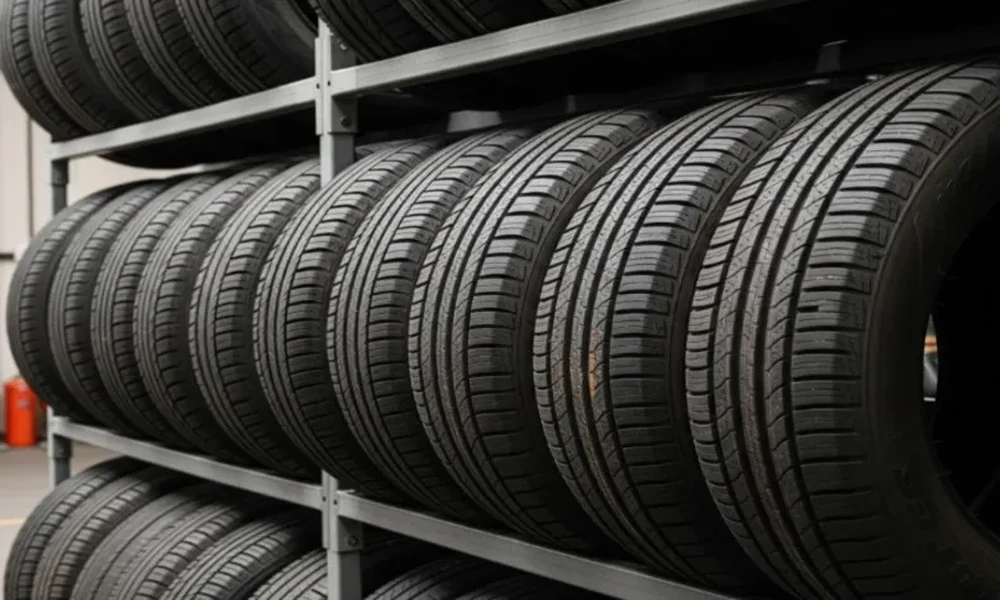
You’ve watched track-day soft compound tyres grip tarmac with ease and wondered if that performance would carry over to your morning commute. If you’re running a 150 70 r17 tyre on your sports bike, the thought makes sense.
But track tyres and daily roads are a mismatched pair in ways that only become obvious after you’ve already committed. Here’s the honest picture before you decide.
What Makes Soft Compound Tyres So Good on Track
The compound, meaning the rubber formula that makes up the tyre’s outer layer, is the key difference. Softer compounds are built to produce strong traction, the grip between the rubber and the road surface, particularly when the tyre reaches its intended operating temperature.
On a circuit, hard braking, fast acceleration, and repeated cornering generate heat quickly. The tread, meaning the grooved outer surface that contacts the road, is often minimal on track-focused tyres.
This maximises the contact patch, the small area of rubber actually touching the tarmac at any given moment, giving you more grip when conditions are ideal.
Is a 150 70 R17 Tyre Right for Your Daily Commute?
Your commute looks nothing like a smooth circuit. Think slow traffic queues, cold roads before sunrise, a wet patch after overnight rain, or a pothole you see just a moment too late.
Soft compound 150 70 R17 tyres need heat to work properly. On a short stop-start city ride, they may never reach that temperature window, leaving you with less grip than you’d expect. That inconsistency isn’t just frustrating: it’s a genuine safety concern.
Here’s what you’re signing up for with a soft tyre on daily roads:
- Accelerated wear: Soft rubber disappears quickly in stop-start urban traffic, and replacement costs stack up fast.
- Poor wet-weather performance: Track-focused tread patterns aren’t designed to move water away efficiently, which raises the risk of aquaplaning, where your tyre skims across standing water rather than gripping through it.
- Greater puncture risk: Soft compounds are more easily cut by sharp debris, pothole edges, and kerb impacts, making sidewall damage (tearing or deforming the tyre’s vertical sidewall between the tread and the rim) more likely.
- Cold-start grip loss: Grip stays inconsistent during the first few kilometres of a cold morning ride until the tyre warms up sufficiently.
What About Comfort?
Track-focused tyres aren’t necessarily designed with commuter comfort as the top priority.
A daily-use motorcycle has to deal with speed breakers, rough patches, uneven surfaces and imperfect roads. A road-oriented tyre is usually developed with these conditions in mind.
If you fit a highly performance-focused tyre to a commuter motorcycle, you may not notice a dramatic difference immediately. However, the tyre’s construction, profile and intended operating conditions can influence how the motorcycle feels over different surfaces.
For most commuters, predictable behaviour matters more than extracting the last bit of cornering performance.
Can Soft Tyres Improve Cornering?[H2]
Absolutely, if they’re the right type of tyre for the motorcycle and the conditions.
A suitable performance-oriented road tyre can provide excellent grip and feedback. If you enjoy spirited riding on twisty roads, that extra performance can be useful.
But there’s an important distinction between a road-legal performance tyre and a tyre designed specifically for track competition.
If you want more grip without giving up everyday practicality, look for a performance tyre that is explicitly designed and approved for road use. You’ll generally get a better balance between grip, wet performance, warm-up behaviour and durability.
Sports Bike Tyres That Make More Sense on the Street
If you want genuine performance grip without the daily trade-offs of a pure track compound, road-going sports bike tyres are the more practical route. They balance dry traction with reasonable wet-weather capability, better tread life, and predictable behaviour across mixed road conditions.
Dual-compound tyres take this a step further. The shoulder, meaning the outer curved edges of the tyre used during leaning, uses softer rubber for cornering confidence. The centre strip, which handles straight-line mileage, runs a harder compound for durability. You get a lean-angle grip without burning through rubber every couple of months.
For sports bike tyres, Eurogrip’s Protorq Extreme HR in 150/60 ZR17 is a tubeless radial rear tyre priced at ₹6,879. It features a zero-degree steel belt wrapped around the tyre’s carcass, the inner structural body beneath the rubber, keeping the tyre rigid at speed and more resistant to punctures. A tri-polymer tread compound balances grip, durability, and mileage across riding conditions.
| Spec | Eurogrip Protorq Extreme HR |
| Size | 150/60 ZR17 |
| Type | Tubeless Radial |
| Position | Rear |
| Price | ₹6,879 |
| Compatible Bikes | KTM Duke/RC, Bajaj Dominar, Honda CBR 500R |
So, Should You Put Track Tyres on Your Daily Rider?
If you’re asking whether it’s possible, the answer depends on the particular tyre. Some soft-compound performance tyres are road legal and can be used for everyday riding.
If you’re asking whether it’s a good idea for most commuters, that’s a different story.
A track-focused tyre is built around a specific purpose: delivering high performance under controlled conditions. Your daily commute demands versatility.
The ideal commuter tyre needs to handle a cold start, traffic, rough roads, rain, braking, cornering and long distances without becoming unnecessarily expensive to replace.
Choosing the Right 150 70 R17 Tyre for Your Ride
Track tyres deliver exactly what they promise, but that promise was never made to daily commuters. If most of your kilometres happen in city traffic, mixed road conditions, or unpredictable weather, a road-performance tyre suited to those realities gives you safer, more consistent results.
The wear, wet-grip limitations, and road-hazard vulnerability of soft compounds rarely justify the trade-off for everyday riding. Match your tyre to the roads you actually use, not the circuit you visit occasionally.
