

Crane rental in Mumbai serves a diverse project base that spans construction, industrial plant installation, infrastructure works, and specialised lifting operations across the city’s complex urban and industrial geography. Choosing the right equipment from a crane rental provider requires understanding both the technical parameters of the lift being planned and the operational context in which the equipment must work. An undersized crane creates safety risk; an oversized crane creates unnecessary cost and access difficulties. A well-matched crane from a properly equipped provider creates the conditions for a lift that completes safely, on schedule, and within budget.
The Key Technical Parameters for Any Lift Plan
Before approaching any lifting crane rental provider, the project team should establish the fundamental lift parameters that determine equipment selection:
- Load weight: the weight of the load to be lifted, including the weight of the rigging hardware and any spreader beams or lifting frames required
- Lift radius: the horizontal distance from the crane’s centreline to the load’s centre of gravity at the point of lift and at the point of placement
- Hook height: the maximum height the load must be lifted above ground level
- Swing arc: the arc through which the crane must swing with the load suspended, and whether any obstructions exist within this arc
- Site access: the dimensions of the access route to the lift location, including overhead obstacles, ground bearing capacity, and space available for outrigger deployment
Types of Cranes Available for Rental in Mumbai
Crane rental providers in Mumbai offer several equipment types whose characteristics suit different project contexts:
- Mobile telescopic cranes: the most versatile option for construction sites and industrial installations, offering good manoeuvrability on prepared surfaces and quick setup with hydraulic outrigger deployment
- Pick-and-carry cranes (Hydra cranes): Indian-manufactured mobile cranes capable of carrying loads while moving, suited to yard and workshop environments where loads must be repositioned across short distances
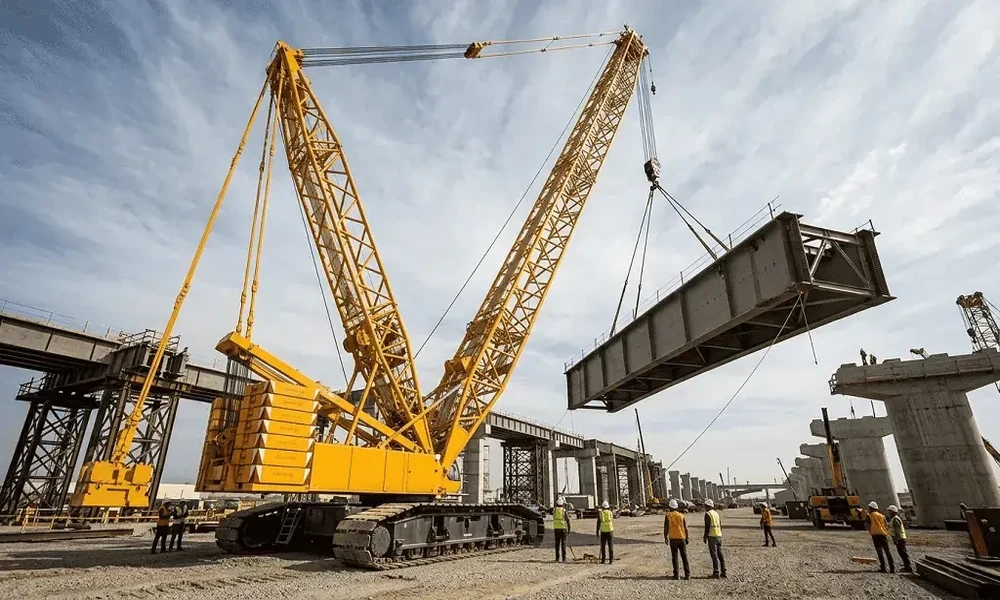
- Lattice boom cranes: higher-capacity cranes with greater maximum lift radius and height capability, appropriate for heavy industrial installation and large-radius picks where telescopic cranes reach their limits
- Boom lifts and scissor lifts: not cranes in the traditional sense, but rental equipment used for personnel access to height and for positioning lightweight equipment in applications where a crane would be disproportionate
Why Operator Certification and Safety Systems Matter
A crane rental in Mumbai engagement involves more than equipment supply. The quality and certification of the crane operators provided with the equipment, and the safety management systems the rental company applies to lift operations, directly determine the safety and success of the lift.
Certified operators who can produce valid DGMS or NSDC operator qualification documents and who have practical experience with the specific crane model and lift type being planned provide a safety foundation that uncertified operators do not. Reputable lifting crane rental companies maintain their equipment in accordance with statutory inspection schedules and provide lifting gear certificates for all rigging equipment used in the lift.
Costing a Crane Rental Engagement
Crane rental pricing in Mumbai typically combines a mobilisation and demobilisation charge, a daily or shift-based hire rate, and charges for extended hire beyond the base period. Additional costs to confirm upfront include operator charges, fuel, rigging equipment hire, and any permit costs for over-dimension vehicle movement on public roads.
Conclusion
Successful Crane Service In Mumbai depends on accurate lift planning, correct equipment selection for the specific lift parameters and site conditions, certified operator provision, and clear commercial terms that account for the full scope of the rental engagement. Project teams that invest in proper lift planning before approaching rental providers consistently achieve safer and more cost-effective outcomes than those who select equipment reactively based on availability rather than on correctly established lift requirements.
