

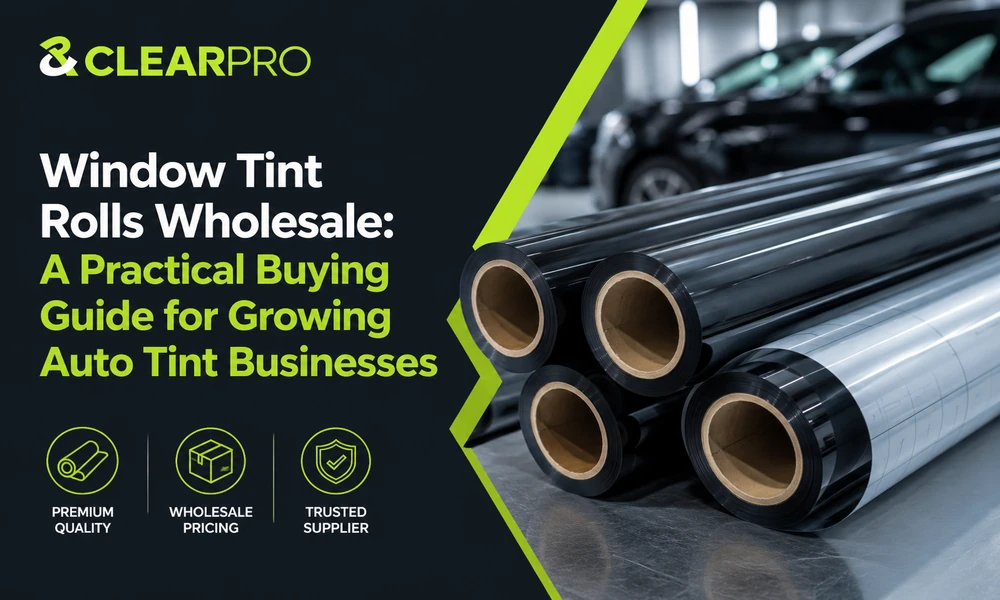
Although you spend most of your time on the next job, running a pro tint shop requires long-term thinking. You need trustworthy materials, smart stock levels, stable costs, and products your installers can use with confidence.
This is why, if your business does regular tint work, purchasing window tint rolls wholesale can be a good idea.
Buying in larger quantities reduces material costs (per roll) and helps keep those films available. However, the other side of that coin is that wholesale purchasing also carries a risk: buying more film than will perform well can tie up dollars and cause installation woes.
The smart move is to assess the film and supplier before making a big order.
When Buying Wholesale is the Right Move
Buying wholesale is usually best for businesses with steady demand.
It can be a good fit for:
- Automotive tint shops
- Detailing studios
- Car dealerships
- Vehicle customization businesses
- Body shops offering tint services
- Mobile tint installers
If your shop only does a few tints each month, it may not make sense to stockpile and buy in bulk.
However, when stock allows frequent installation, and you want to keep costs manageable without waiting for new stock.
Choose Film Technology Carefully
No single window film will tell you exactly what customer it’s not for.
Dyed Film
Dyed film is usually chosen due to lower cost and look.
This gives a dark appearance and privacy without the price premium of a luxury film.
Carbon Film
This puts carbon film between economy dyed products and premium ceramic.
It can be attractive because it looks darker, offers strong performance, and often gives customers a price-to-quality advantage.
Ceramic Film
Ceramic film is typically marketed to buyers seeking superior solar performance and cabin comfort.
It can deliver significant heat-management benefits while still letting light through (depending on the product).
Ceramic film can also help a shop upsell premium customers in exchange for a more valuable service.
Never Judge a Roll by Its VLT Alone
Visible Light Transmission (VLT) shows how much visible light goes through a window.
In most cases, a lower VLT value means a darker film.
But VLT doesn’t tell you everything there is to know about performance.
When you compare wholesale products, take into account the following specs as well:
- UV protection
- Solar energy rejection
- Infrared performance
- Optical clarity
- Film construction
- Adhesive characteristics
- Warranty coverage
Let’s get back to that synoptic overview − dark film is not necessarily a high-performance one.
Test Before Stocking Up
This is crucial for wholesale purchasing.
Do not place an order for a box of products just off of pictures or a description of an item.
Request samples first.
Have your installers test the film on a variety of glass types. Check how it performs on application and how it looks once cured.
Evaluate:
- Adhesive behavior
- Shrinkage
- Handling
- Clarity
- Color consistency
- Edge finishing
- Installation speed
- Waste percentage
Always listen to your installers as part of the buying decision. They work with the material day to day and can spot issues quickly.
Check Storage Requirements
Window tint rolls require special storage.
Stick to the manufacturer suggested temperature, humidity, sunlight and handling.
Safeguard rolls against dust and physical damage. Store them where they will not get crushed, bent, or put under unnecessary pressure.
Before the film ever even hits a car, good storage protects your investment.
ClearPro: Clear Vehicle Protection Film
One brand you might not have heard of is far more focused on paint protection film than traditional window tint, but it warrants mention in our rundown of automotive film brands: ClearPro.
This distinction matters for businesses that offer multiple vehicle protection services.
ClearPro makes UltraClear, UltraSatin, and their eponymous Cosmoblack and Carbon Fiber Black PPF. It also offers weather-protection products such as windshield and headlight protection. UltraClear is engineered to balance paint protection with optical clarity, gloss, hydrophobic performance, and self-healing technology. CLEARPROCUT™ is a pattern software platform from ClearPro that helps installers create precise pre-cut PPF patterns.
A tint shop might use a specific window-film line for all glass and ClearPro PPF on painted surfaces.
And while tint might be only one appointment, a seamless demo can lead to a much larger conversation about vehicle protection.
Understand Wholesale Warranty Terms
A wholesale purchase warranty should include a full warranty description.
Installing does not guarantee warranty
Ask:
- What defects are covered?
- How long does coverage last?
- Does the warranty need to be done by with professional installation?
- What other documents to submit with the claim?
- Who handles warranty issues?
- Are labor costs covered?
Archive copies of invoices, product details and batch information wherever applicable.
Having proper documentation can make warranty claims much easier in the future.
Learn They Replace the Speedy Stock
This makes inventory planning less complex if this provider can stick to their estimated shipping times.
Inquire about standard lead times and restocking schedules.
Having stock of your most profitable movies can also help. When they run out of a universal color, you may have to either reschedule or give the customer something else instead of what they ordered.
A reliable supply is an integral to reliable service.
Avoid These Wholesale Buying Mistakes
Buying Only on Price
This may increase labor and waste costs on a low-cost roll.
Ordering Too Much
Bulk discounts are worthless if the material sits about for months.
Ignoring Installer Feedback
In theory, a product might appear great but is challenging to install.
Skipping Samples
Testing is cheaper than a big shipment of the wrong film stuck in your hands.
Forgetting Local Tint Laws
Film must comply with any applicable regulations. It can vary from one window to another, or by location.
Develop a Wholesale Strategy That Scales
Start with products that align with your existing customer demand.
Follow what colors of film are running out. Track waste and installation times. Review customer feedback.
Then base your purchase decisions on the real-world outcomes.
It also turns wholesale buying from a bulk-ordering process into a practical inventory strategy.
Final Takeaway
Well, if you have a larger, more established tint business that is already deep in the game then buying window tint rolls wholesale can help you keep material costs low and ensures you have sufficient supplies on hand to gear up for new jobs.
This is only effective for wholesale products.
Compare film tech, VLT, performance specs, roll size, warranties & more! Test new products before buying in large quantities, and partner with suppliers who can guarantee stock availability.
The all-time best bulk approach is basic − purchase on performance, stock to need, and sell what your install partners buy.
