

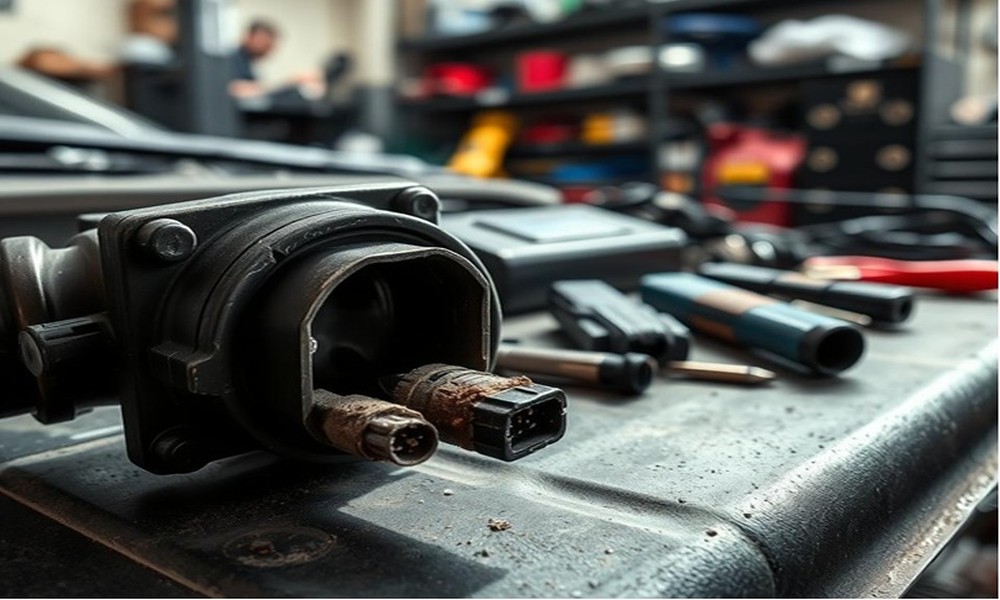
Air flow meters, also known as mass air flow sensors, are small but vital. They measure air intake to adjust fuel levels. Most drivers don’t think about them until the engine acts strangely.
When these sensors fail, symptoms appear quickly. The air-fuel mix becomes unbalanced, causing combustion issues. This makes problems seem random and unpredictable.
This guide explains common MAF sensor failure signs simply. You’ll learn how a check engine light can signal issues like a rough idle or hard starts. Other signs include hesitation when accelerating or a drop in power.
On Australian roads, these problems are more noticeable in certain driving conditions. They can be seen in stop-start traffic, steady cruising, and when merging or overtaking. Even if the engine runs, ignoring these signs can harm performance and emissions over time.
Key Takeaways
- Air flow meters (mass air flow sensor units) help control fuel delivery and smooth combustion.
- Bad air flow meter symptoms often start as small changes in idle quality, throttle response, or starting.
- A check engine light MAF alert can show up alongside rough idle stalling or surging.
- Hesitation on acceleration and poor fuel economy are common clues when airflow readings are wrong.
- Symptoms may stand out more on Australian roads during stop-start driving and overtaking loads.
- Driving for long periods with MAF sensor failure signs can worsen emissions and strain the engine.
What an Air Flow Meter Does in Modern Engine Management
As you probably know, air flow meters act like the engine’s scorekeeper for airflow. They measure air intake to help the engine management system deliver the correct fuel. This data goes to the MAF sensor ECU, starting the air-fuel ratio calculation for cleaner power.
In many cars, the mass air flow sensor uses a hot-wire design. It has two tiny wires: one heated by electricity, the other near room temperature. Air passing through cools the heated wire, and the sensor tracks this cooling.
The sensor’s logic is simple. More air means faster cooling, so it needs more electricity to stay at the right temperature. This electricity signal tells the MAF sensor ECU about airflow. It helps the engine burn fuel well, whether idling, cruising, or speeding up.
Fueling depends on this data, so small errors can affect the engine. This can lead to rich or lean mixtures, causing rough idling, stalling, or vibration.
|
Airflow input quality |
What the computer “sees” |
Typical impact on air-fuel ratio calculation |
What a driver may notice |
|
Accurate, stable signal |
Airflow matches real engine demand |
Small corrections; supports optimal combustion |
Smooth idle, consistent throttle response, normal fuel use |
|
Under-reporting airflow |
Less air than is truly entering |
Commands less fuel than needed; can trend lean |
Hesitation under load, surge, and higher combustion temps |
|
Over-reporting airflow |
More air than is truly entering |
Commands extra fuel; can trend rich |
Fuel smell, sootier exhaust, sluggish response at times |
|
Dropouts or noisy signal |
Airflow jumps around moment to moment |
Wide swings; frequent corrections |
Rough idle, stalls, wandering RPM, check engine light |
Where the Air Flow Meter Is Located and Why That Matters for Diagnosis
The air flow meter is usually easy to find. It’s in the intake tract, where the engine checks every air intake.
On most cars, the MAF sensor is between the air filter and the throttle body. This spot lets it quickly measure airflow. But, it also means it’s exposed to dust and moisture.
The intake hose sensor location is often clear when you open the bonnet. Look for a small sensor with an electrical connector in the ducting near the engine.
Some cars hide the sensor as an air filter box MAF. This can make it hard to spot. The housing might blend into the airbox lid, so you need to follow the intake path to find it.
This location is important for checking the sensor. A loose air filter seal, cracked intake hose, or oil mist can affect its readings. These issues can make the sensor think the engine is breathing differently.
|
Typical placement |
What you usually see |
What can it be exposed to |
Why it matters during checks |
|
MAF sensor between air filter and the throttle body |
Sensor body in the intake tube with a plug and wiring loom |
Fine dust, road grit, moisture after heavy rain, oily vapor |
A fast visual review of hoses and clamps can explain odd readings |
|
intake hose sensor location near the radiator support |
Easy-to-spot connector on the ducting, often near the airbox outlet |
Water splash, heat soak, vibration, dirty filter leaks |
Helps link drivability issues to intake leaks and poor sealing |
|
air filter box MAF integrated into the airbox lid |
Less visible sensor area, sometimes recessed into plastic |
Debris from a poorly seated filter, moisture in the box, dust bypass |
Encourages checking filter fitment and airbox clips for gaps |
Most Common Warning Signs of Failing Air Flow Meters
Many drivers first notice failing air flow meters when the car feels “off” in normal traffic. One trip is smooth, the next feels jumpy, even on the same route. These MAF warning signs often show up before the problem becomes obvious.
When the computer sees airflow data that doesn’t make sense, it may switch on the check engine light P0100 P0104 after a short drive. On many Australian vehicles, a quick scan can show those codes even if the car seems fine. The light may come and go, which can make the issue easy to ignore.
At idle, bad airflow readings can upset fuel trim and spark timing, leading to a rough idle. This can feel shaky or uneven. In stop-and-go city driving, this instability can turn into stalling right as you come to a halt. It tends to be worse when the engine is warm and RPM is low.
On takeoff, the meter has to react fast as airflow rises. If it lags or misreads, you can feel hesitation acceleration. This is like the engine pauses before it responds. Some drivers also describe a brief jerk when merging or pulling out of a roundabout.
During cranking, the engine depends on accurate airflow-based fueling. If the signal is erratic, a hard start or no start can happen. This means longer cranks and repeated attempts. Cold mornings can make the symptoms easier to notice.
https://www.youtube.com/watch?v=MrvxzsVHgns
At a steady speed, airflow should be stable, so problems stand out. Engine surging bucking can feel like a gentle push-pull at light throttle. It may come and go, which can make diagnosis tricky without capturing data.
|
What you feel |
When it shows up most |
What it can resemble |
Quick clue to notice |
|
check engine light P0100 P0104 |
After a few minutes of driving or a restart |
Loose intake clamp or electrical glitch |
Light may flick on, then clear, then return |
|
rough idle |
Stopped at lights, in Park, or in Drive with the A/C on |
Vacuum leak or worn spark plugs |
Tach needle hunts or the engine feels lumpy |
|
stalling |
Rolling to a stop, slow turns, or quick off-throttle moments |
Dirty throttle body or low fuel pressure |
Dies suddenly, then restarts as if nothing happened |
|
hesitation acceleration |
Pulling away, overtaking, or merging onto a motorway |
Transmission shift issue or clogged injector |
Short flat spot before power arrives |
|
hard start no start |
First start of the day or after a hot soak |
Weak battery or failing fuel pump |
Extra cranking, uneven catch, or repeated attempts |
|
engine surging bucking |
Cruising at steady speed with light throttle |
Misfire under load or unstable fuel delivery |
Rhythmic push-pull feeling without moving the pedal |
Fuel Economy and Exhaust Clues That Point to Airflow Measurement Problems
A sudden change at the pump can be a first sign of airflow issues. If a sensor problem causes poor fuel economy, you’ll see less fuel efficiency. This is common on Australian commutes.
If the meter shows too much air, the engine adds extra fuel. This makes the air-fuel mixture rich. You might notice more frequent fill-ups, a stronger fuel smell, and a dirtier tailpipe.
Exhaust color can reveal what’s happening in the engine. Black smoke when accelerating or after starting cold means fuel isn’t burning fully. This leads to soot and unburned hydrocarbons in the exhaust.
Running rich can cause emissions problems and risk damage to the catalytic converter. The converter works harder, leading to a shorter life. This can cause the vehicle to fail tests, even if it seems fine.
Underreported airflow can also cause issues. Lean running symptoms include hesitation, light surging, or a rough idle. These signs show the mixture is too thin for stable combustion.
|
Clue you can notice |
What the engine may be doing |
What it can lead to |
|
More frequent fill-ups and lower km per tank |
Fueling trims chase bad airflow data, causing decreased fuel efficiency |
Higher running costs and stronger fuel odor |
|
Black smoke exhaust on throttle |
Too much fuel for the available air, creating a rich air-fuel mixture |
Fouled plugs, soot buildup, and emissions problems |
|
Hesitation or uneven idle with no smoke |
Not enough fuel commanded for the true air load, showing lean running symptoms |
Stumble on takeoff and harder cold starts |
|
Persistent rich smell from the tailpipe |
Unburned fuel passes through the exhaust stream |
Catalytic converter damage risk and possible warning light |
Drivability and Power Symptoms Drivers Commonly Notice on Australian Roads
On busy city streets, the car might feel off-beat. You press the pedal, but there’s a delay. Then, the engine catches up.
In stop-start traffic, this delay turns into poor acceleration. It’s hard to ignore.
On-ramps and short passing windows show hesitation merging. The engine stumbles when you need a quick surge. This can lead to a sharp loss of power, even with the pedal down.
At intersections and roundabouts, stalling at stops is common. Drivers see the idle hunting up and down before it quits. Heat, dust, and long idle times make these symptoms worse in Australia.
On long motorway stretches, the car surges while cruising. It feels like it’s being pushed and pulled. This is due to the ECU trimming fuel back and forth.
|
Where it shows up |
What you feel behind the wheel |
Why it matters in traffic |
|
Urban stop-start streets |
Throttle response delay, rough takeoff, poor acceleration |
Gaps close fast, so the car feels harder to place smoothly |
|
On-ramps and overtakes |
Hesitation merging, brief stumble, loss of power under load |
Power arrives late, which can shrink safe passing space |
|
Intersections and roundabouts |
Rough idle, stalling at stops, restart that needs more throttle |
Stops feel unpredictable, specially when you’re creeping forward |
|
Steady motorway cruising |
Surging cruising, light bucking, speed that won’t stay even |
Driver fatigue rises as you keep correcting with small pedal inputs |
Related Systems That Can Act Up When Airflow Data Is Wrong
When airflow data is wrong, problems start quickly. The ECU uses this data to figure out engine load. It then adjusts fuel, spark, and throttle to match what it thinks the engine needs. If the data is bad, many systems can seem faulty, even if they’re working right.
Drivers often notice issues with automatic shifting first. Modern cars use load and throttle demand for shifting. So, if the data is off, you might see hard shifts or gear hunting.
Engine combustion can also be affected. If fueling is off, the engine might stumble. This can happen under light throttle or when merging onto a motorway. It might feel like a misfire from MAF, even with healthy parts.
Many ECUs go into limp mode when airflow data fails checks. Others use MAP sensor fallback to estimate airflow. This can make the car feel less powerful and less fuel-efficient.
|
System that reacts |
What it uses from airflow data |
What you may feel on the road |
|
Fuel and spark control |
engine load calculation for target air-fuel ratio and timing |
Hesitation, rough idle, and misfire from MAF under light acceleration |
|
Automatic transmission control |
Load estimate for shift pressure and shift timing |
PCM transmission shifting that turns into hard shifts delayed shifting |
|
Shift strategy on grades |
Predicted torque demand during steady throttle |
gear hunting between gears, specially on long climbs |
|
Backup operation |
limp mode default values or MAP sensor fallback airflow estimates |
Common Reasons Air Flow Meters Fail and What Typically Shortens Their Lifespan
In many cars, the MAF sensor is meant to last as long as the car. In Australia, this depends on driving conditions and maintenance. Skipping service and driving on rough roads often leads to MAF failure.
A dirty air flow meter is a common problem on dusty roads. An air filter installed wrong can also cause issues. Even small debris can affect airflow readings and engine performance.
Oil contamination in the PCV system can also be a problem. It can coat the sensor and distort signals. Over time, engine vibrations can weaken electronics and connectors.
Moisture can cause corrosion, which can lead to failure. This can happen after heavy rain or temperature changes. Catching these issues early can prevent bigger problems and save money.
